Documenting Movement Patterns Against the Weekly Nutrition Log
The relationship between daily movement and food selection is not linear, nor is it simple. A person who walks three miles in the morning does not automatically eat more at lunch; a person who runs five times a week does not automatically maintain a lower body weight than one who does not. What the nutritional record reveals, when movement data is layered alongside it, is a more nuanced picture: one in which activity level influences food preferences, meal timing, appetite rhythms, and — with some consistency — weight range. The following observations draw on a ten-week dual record kept in early 2026.
Constructing the Dual Record
The dual record comprised two parallel logs maintained daily across ten weeks. The nutrition log used the same visual notation system described in the portion-awareness record published in February — a relative volume score per component, with additional notation for whole food versus processed food presence. The movement log recorded activity type, duration in minutes, and a simple intensity rating of low, moderate, or high. No specialist equipment was used; both records were kept in a paper notebook.
Activity types recorded included walking, running, cycling, structured resistance training, and swimming. The ten weeks were not uniform in their activity distribution. Weeks one through four showed a pattern of low-intensity daily walking with occasional moderate-intensity sessions. Weeks five through seven saw an increase in structured activity — three to four sessions per week at moderate to high intensity. Weeks eight through ten represented a return to the earlier pattern due to a brief interruption from travel and schedule.
The comparative analysis focused on identifying whether any nutritional variables shifted in correspondence with these changes in movement pattern — and whether those shifts could be observed without reference to calorie figures.

Movement and Appetite Rhythm
The most consistent nutritional shift observed during the higher-activity weeks was a redistribution of meal timing. During low-activity weeks, the record showed a standard three-meal pattern with between-meal eating occurring primarily in the afternoon. During higher-activity weeks, the pattern shifted: breakfast became larger and earlier, the afternoon snacking reduced, and dinner was consumed earlier in the evening. The overall meal count remained the same, but the distribution of eating across the day changed noticeably.
This redistribution has a functional basis. Morning exercise, particularly at moderate to high intensity, elevates appetite in the hours that follow. The body's appetite signals respond to energy expenditure with a degree of proportionality. What is notable is that this response operated through timing — the appetite appeared earlier and was satisfied earlier — rather than through a simple increase in total food volume. The total portion scores across higher-activity days were not substantially greater than on low-activity days. The distribution shifted; the total did not dramatically increase.
The implication for eating patterns is practically significant. A person whose daily activity level fluctuates — as most people's does across a working week — can expect their appetite rhythm to shift in correspondence. Recognising this as a structural response rather than a lapse of control is part of what makes food journalling useful: it makes the pattern legible and therefore manageable.
"The appetite appeared earlier and was satisfied earlier — the distribution shifted; the total did not dramatically increase."
Food Selection and Activity Level
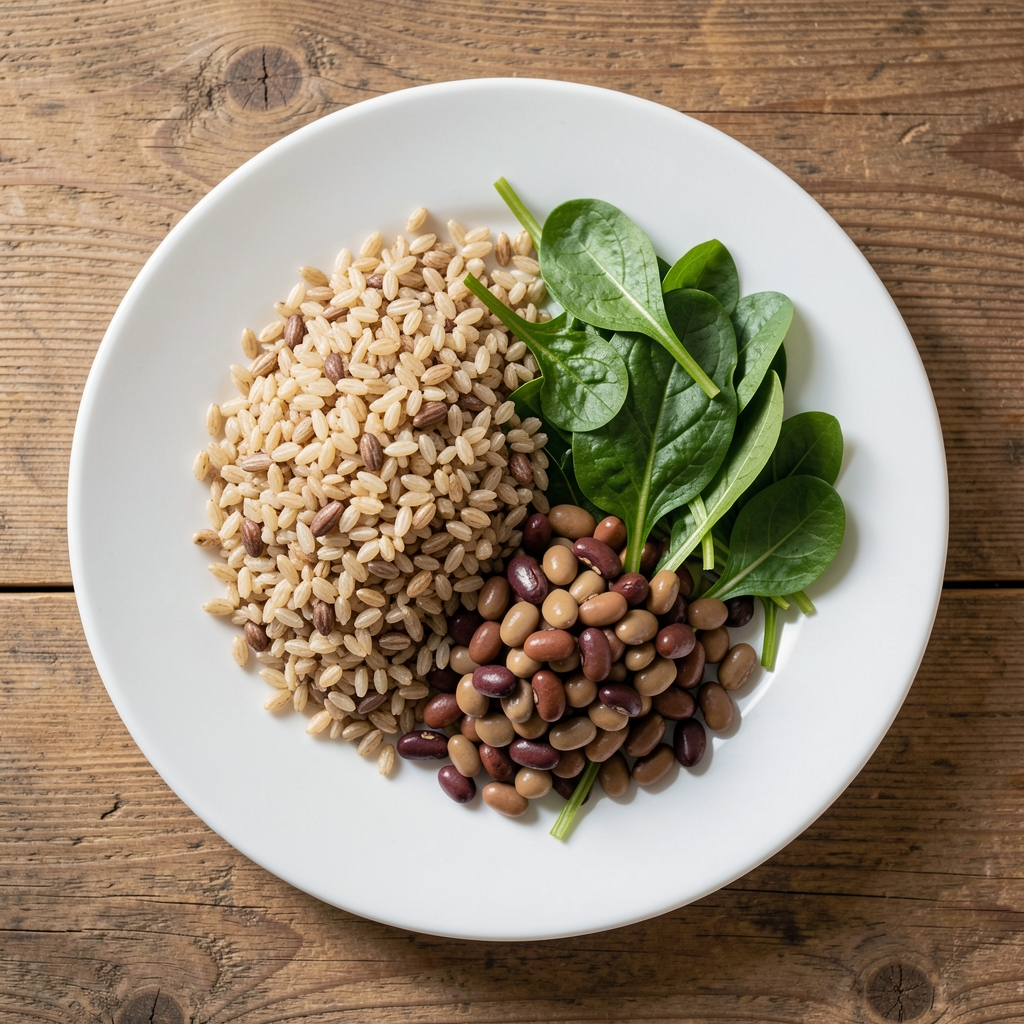
During weeks five through seven — the higher-activity period — the nutrition log showed a measurable increase in the proportion of protein-rich whole foods at breakfast and lunch. Eggs, legumes, and nuts appeared more frequently in the morning and midday records. This was not a deliberate choice; the record-keeper reported no conscious nutritional strategy during these weeks. The shift appeared to reflect an instinctive response to higher activity — the body's preference for foods that contribute to sustained energy through the day moved toward more protein-rich content at earlier meals.
Simultaneously, the proportion of dietary fibre — from vegetables, legumes, and whole grains — increased. The record shows more substantial lunches with a higher plant-based meal component during the active weeks. This is consistent with the observation from the seasonal nutrition record: whole foods presence tends to increase when the eating environment is structured and attentive. Higher activity levels, in this record, corresponded with a more structured daily routine, which in turn corresponded with more deliberate food preparation.
The relationship between routine, activity, and food quality appears to be triangular rather than linear. Activity alone does not determine food choices. But activity embedded within a structured daily routine — morning movement followed by a deliberate breakfast, an organised lunch break, an early dinner — produces a food environment that naturally supports nutritional variety and whole food presence. The structure is the mechanism, not the activity in isolation.
Weight Range Across Activity Levels
Weight was recorded daily across the ten weeks. The range across all ten weeks was 3.1 kg — a figure that encompasses normal daily variation as well as any genuine shifts in body composition. The lower end of the range clustered in weeks five through seven; the higher end in weeks eight through ten, following the disruption of travel. Week one through four occupied the middle of the range.
It is not possible, from a ten-week dual record, to draw conclusions about the direction of causation. The lower weight during high-activity weeks may reflect direct energy expenditure effects. It may equally reflect the better food choices observed during those weeks, or the more structured routine, or the combination of all three. What the record can state is that the cooccurrence was consistent: higher movement, better nutritional variety, lower end of the weight range — all appearing together in the same weeks.
The practical value of this observation is not in the weight figures themselves. It is in the recognition that movement and nutrition are more useful when observed together than when tracked separately. A food record without movement data misses a significant contextual variable. A movement record without nutritional data misses the food environment that the activity shapes. The dual record, even kept simply in a notebook, provides a more complete picture than either record alone.
Low-Intensity Movement and the Daily Nutrition Pattern
A secondary finding of this record concerns low-intensity movement — specifically, daily walking. Walking is the most common form of physical activity in the UK population, requires no equipment or training, and integrates naturally into the urban routine. During the ten weeks of this record, walking frequency and duration were tracked alongside the nutritional log. The finding was consistent: days that included a walk of 30 minutes or more showed a different afternoon eating pattern from days that did not include any structured movement.
On walking days, afternoon between-meal eating was less frequent and involved smaller portions. On sedentary days, afternoon eating occurred more often and portion sizes were larger. The walking, in this record, appeared to function as a natural rhythm-setter for the afternoon. Whether this operates through appetite suppression, mood, cortisol regulation, or some other mechanism is outside the scope of an observational food journal. What the record documents is the association — reliable, consistent, and practically useful.
The broader implication for weight and lifestyle is that low-intensity regular movement — integrated into the daily structure rather than set aside as exercise time — may have a more significant influence on eating patterns than its modest energy expenditure would suggest. It shapes the day, and the day shapes the plate.
- 01 Higher-activity weeks shifted meal timing earlier — not total food volume, but distribution across the day.
- 02 Protein-rich whole foods increased at breakfast and lunch during active weeks without deliberate planning.
- 03 Lower weight range co-occurred with higher activity and better nutritional variety across the same weeks.
- 04 Daily 30-minute walks corresponded with less and smaller afternoon between-meal eating.
- 05 The dual record (movement + nutrition together) provides more interpretive value than either record alone.

Eleanor Whitfield is the primary editor of Keldova Almanac. Her work focuses on the documented relationship between food environment, activity patterns, and daily nutritional practice across extended observational records.
More from Eleanor Whitfield →